[Editor’s Note: This post was written by 2014 graduate Connor Bowlan. Connor and his co-founder, Rhett, originally were accepted to The Brandery with their fashion and beauty advice app, Lookit. Throughout the course of the program, their startup evolved to what is now: Cintric, a joint venture between Connor’s company and another startup in the program. You can read more about their journey through The Brandery in this recent Soapbox article.]
Features are one of the worst things a startup can build into an early-stage product.
Features distract the company. Startups find success in innovative solutions to big problems. These solutions form the core of products, and are where the customer finds value they’re willing to pay for. At an early stage, startups should be focusing all their efforts on finding the best version of their solution by iterating on their core product. Feature development distracts from this task.

In one of the earliest versions of our application “Lookit,” we had a little robot character that guided the user through the signup process. The robot even had animations that would progress with each letter the user typed for their name and password. Was it neat? Definitely. Is animating the registration fields spending time improving the core product? Definitely not.
Features distract the product.
When creating a product that’s new, one of the biggest challenges is crystallizing exactly what it is. This applies in both the minds of the team and the end users. The simpler the product, the easier it is to understand what it’s purpose is and how to best achieve it. Features add complexity, and complexity distracts from the core purpose of a product.

In a later build of “Lookit,” we experimented with gamifying the platform. We built a series of “trinkets” that users could win by contributing to the community and gambling in a slot-machine feature. Session time skyrocketed to an average of 14 minutes, but we weren’t solving the problem we had set out to. It drew users away from the core of the product, and away from where we were able to give the most value.
Features distract the user.
When you’re building something new, the end user will have to learn how to use your product. Adding features means the user has more learning to do before being able to draw value from the product and use it effectively.In the second build of our application “Quack,” we tried to solve one of our user-experience problems by adding another feature. This feature did away with one of the core rules of our product in order to get around a relatively small issue. In doing so we completely confused the user by introducing a competing ruleset, and made them go through another permissions process, all to implement a feature that ended up not being enjoyable for them to use.
Features are often wasted.
Startups frequently change their core products in significant ways as development progresses. When the product changes, features that have been developed often don’t have a place anymore and must be scrapped.
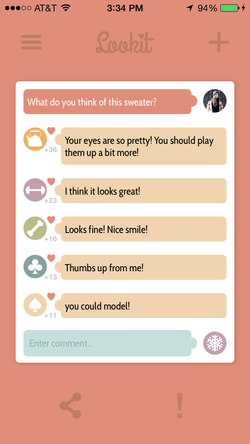
There is a fully complete card-based version of “Lookit” sitting on a bitbucket server somewhere that will probably never see the light of day. It has voting, a gorgeous UI, face-detection, and quite a few more features. Ultimately though, none of those matter. They’re great bits of design and coding that had to be thrown out because the core product they were built on wasn’t strong enough.
Once a product has matured enough to where it’s solving a user’s problem in the most efficient way possible, then features can be introduced to make that process enjoyable for the user to engage with. This must be done slowly though, so as not to confuse or overwhelm the user.
This is where the CPO role really shines, as their job is not just to guide what the product is, but also to guide what the product isn’t.
Building a product without features can be difficult. In the early phase of a startup, it can be challenging to avoid getting carried away in an environment where the product roadmap is set in something more akin to clay than concrete. This is where the CPO role really shines, as their job is not just to guide what the product is, but also to guide what the product isn’t. A good CPO will aggressively maintain development focus on the core of the product, even when features might be exciting or easy to complete.
At Cintric, we help developers build efficient mobile location services into their apps, from early stage startups that want to use location as a basis for their core experience, to large enterprises that wish to add location features to their existing and established apps. Cintric can be used to integrate rich location components that add a tremendous amount of value to the core of a product. Even including customizing experiences via demographic information and precise analytics of where users engage with different parts of the app.
If you’d like to chat about how Cintric can improve your mobile app with efficient and easy to setup location services, or you’d like to simply tell me why I’m wrong about features, contact me at [email protected].